
How to build a 5 gallon bucket DWC system in minutes
Grow Fresh Food Indoors With a DIY DWC System
DWC hydroponics DIY is one of the fastest ways to grow fresh food at home — no soil, no garden, no mess.
Here’s the quick version of what you need to know:
- What it is: Deep Water Culture (DWC) suspends plant roots directly in an oxygenated, nutrient-rich water solution inside a bucket or tote.
- What you need: A 5-gallon bucket, net pots, an air pump, air stones, airline tubing, clay pebbles, and hydroponic nutrients.
- How long it takes to build: About 30–45 minutes for a basic single-bucket setup.
- How much it costs: As little as $20–$75 depending on whether you already own an air pump.
- Best plants to start with: Lettuce, basil, kale, and spinach — lettuce can be ready in around 30 days, roughly half the time it takes in soil.
The setup is simple enough for a complete beginner. If you can run a basic fish tank, you can run a DWC system.
It’s especially well-suited for urban dwellers. No outdoor space required. No muddy pots. Just clean, fast-growing plants on a shelf, in a closet, or on a countertop.
The biggest reason people hesitate? They think it’s complicated or expensive. It isn’t. A 5-gallon bucket, a cheap air pump, and a bag of clay pebbles is genuinely all it takes to get started.
Below, we’ll walk you through every step — from cutting your first hole in a bucket lid to harvesting your first head of lettuce.
What is Deep Water Culture and How Does it Work?
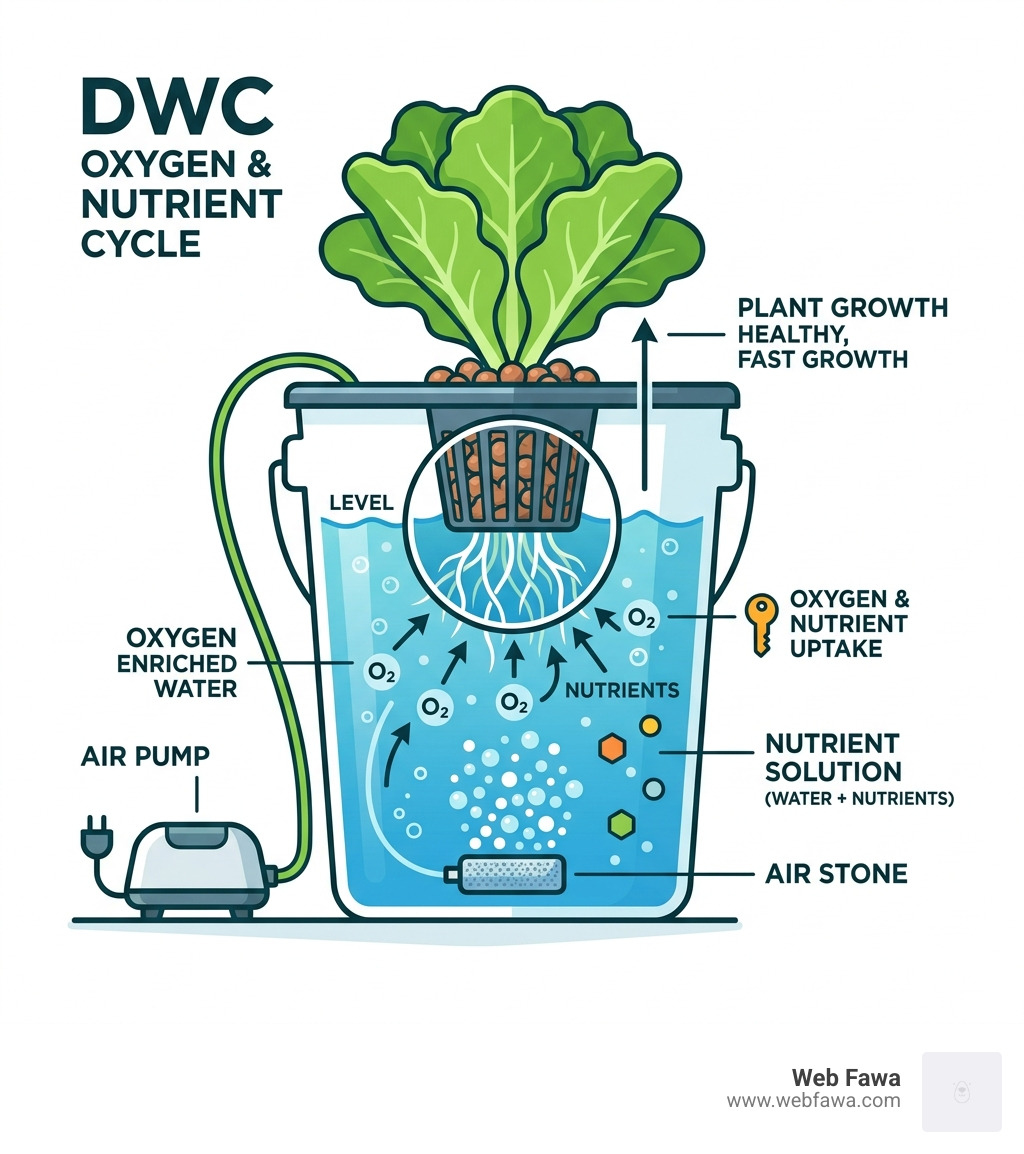
At its core, Deep Water Culture (DWC) is the purest form of hydroponics. While other methods use complex timers or moving gutters, DWC keeps it simple: your plants sit in a “raft” or a lid, and their roots dangle directly into a reservoir of bubbly, nutrient-rich water.
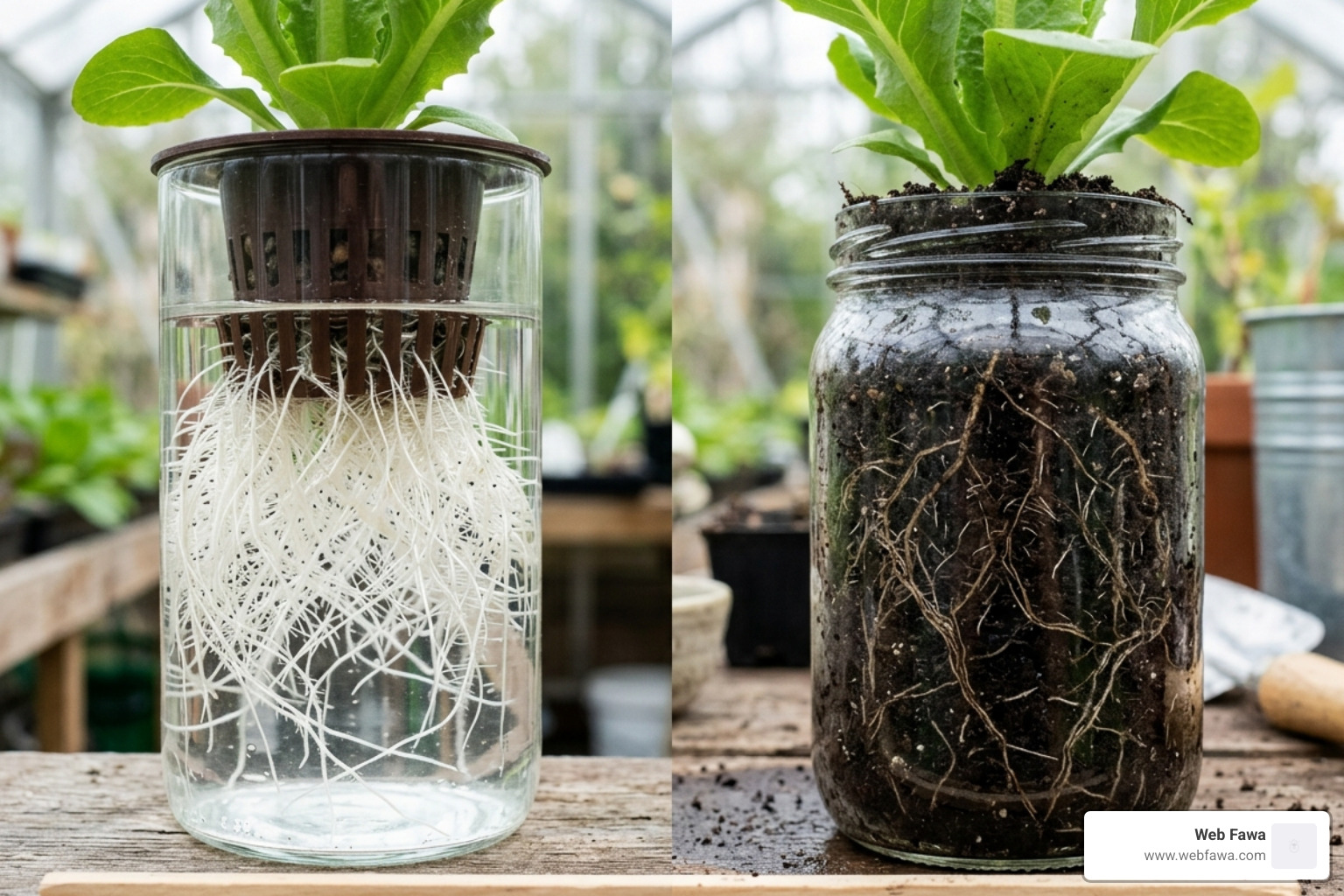
This isn’t just a hobbyist’s dream; it’s backed by serious science. Research from NASA, the University of Arizona, and UC Davis has shown that hydroponic and aeroponic systems lead to significantly faster and healthier growth than traditional soil methods. Why? Because the plant doesn’t have to “work” to find food. In soil, roots have to push through dense Earth to find pockets of moisture and minerals. In a dwc hydroponics diy setup, we deliver the buffet directly to them.
The DWC Variations
While we are focusing on the classic 5-gallon bucket today, it’s worth knowing your options as you grow in your journey with us:
- Standard DWC: The classic bucket setup with an air pump and air stone.
- Kratky Method: A passive version of DWC. You don’t use an air pump. Instead, you leave an air gap between the net pot and the water level. As the plant drinks, the water level drops, exposing more “air roots.” It’s the ultimate low-maintenance choice, though growth is slightly slower than active systems.
- RDWC (Recirculating Deep Water Culture): This is how you scale up. You connect multiple buckets to a large central reservoir. A pump moves the water through all the buckets, ensuring every plant gets the same nutrient mix.
- Bubbleponics: A hybrid that adds a small water pump to drip nutrient solution over the top of the roots until they grow long enough to reach the reservoir.
| Feature | Standard DWC | Kratky Method | RDWC |
|---|---|---|---|
| Power Needed | Yes (Air Pump) | No | Yes (Air & Water Pump) |
| Complexity | Low | Very Low | High |
| Growth Speed | Fast | Moderate | Very Fast |
| Best For | Beginners | Off-grid/Lazy setups | Large-scale hobbyists |
Pros and Cons of DWC Hydroponics DIY Systems
We love DWC because it feels like magic. You put a tiny seedling in a bucket, and suddenly you have a massive head of lettuce. But like any system, it has its quirks.
The Pros:
- Insane Growth Speed: Lettuce can be grown in around 30 days in DWC compared to 60 days in soil. That’s a 50% time saving!
- High Yields: Because plants have constant access to oxygen and nutrients, they grow larger and more robust.
- Low Maintenance: Once the system is running, you really only need to check the pH and water levels.
- Water Efficiency: You use significantly less water than soil gardening because there’s no runoff or evaporation from the soil surface.
The Cons:
- Power Dependency: If your air pump fails or the power goes out, your roots can suffocate. Roots in DWC need oxygen 24/7.
- Water Temperature: If the water gets too warm (above 72°F), it holds less oxygen, which can lead to the dreaded “root rot.”
- Algae Risk: If light leaks into your bucket, algae will move in and start eating your plant’s dinner.
Choosing the Right Plants for DWC Hydroponics DIY
Not every plant wants to go for a swim. While you can grow almost anything, some plants are “DWC superstars.”
- Leafy Greens: Lettuce (butterhead, romaine), spinach, kale, and Swiss chard are the easiest wins.
- Herbs: Basil grows like a weed in DWC. Mint, parsley, and cilantro also thrive.
- Fruiting Plants: Once you get the hang of it, you can grow peppers and tomatoes. Just keep in mind that these are “nutrient-hungry” and will require a larger reservoir (like a 10-gallon tote) to keep the pH stable.
- Strawberries: Compact varieties do well, though they can be a bit more sensitive to nutrient shifts.
Essential Materials and Cost Breakdown
Building your own dwc hydroponics diy system is surprisingly affordable. You can source most of these parts at a local hardware store or an aquarium shop.
The Shopping List:
- 5-Gallon Bucket (Black/Opaque): $4–$7. It must be opaque to block light.
- Net Pot Lid (6-inch or 10-inch): $5–$8. These fit right onto the bucket.
- Air Pump: $10–$25. Look for one rated for at least 5–15 gallons.
- Air Stones and Tubing: $5–$10. Larger stones create better bubbles.
- Check Valve: $2. This prevents water from siphoning back into your pump if the power fails.
- Growing Media (Clay Pebbles/Hydroton): $10. These support the plant.
- Hydroponic Nutrients: $15–$30 for a starter set.
- pH and EC Meters: $15–$40. These are your “eyes” into the water chemistry.
Total Estimated Cost: $50–$100 (depending on the quality of your electronics).
For a deep dive into the best brands and specialized gear, check out our more info about hydroponic equipment and supplies.
Tools Needed:
- A drill with a 1/4″ bit (for the air line).
- A hole saw (if you are cutting holes into a standard lid instead of buying a pre-made net lid).
- A measuring cup for nutrients.
Step-by-Step Guide to Building Your DWC System
Ready to get your hands dirty (well, technically wet)? Follow these steps to build your first 5-gallon bucket system.
Step 1: Prepare the Reservoir
Clean your bucket thoroughly. If you bought a white or blue bucket, you need to make it light-proof. You can wrap it in aluminum tape or spray-paint the outside black. If light gets in, algae will grow, and algae is the enemy of healthy roots.
Step 2: Prepare the Lid
If you bought a dedicated net-pot lid, you’re golden. If you’re using a standard lid, use a hole saw to cut a hole that matches the size of your net pot (usually 3 or 6 inches). You want the net pot to sit snugly without falling through. Drill a small 1/4″ hole near the edge of the lid for your air tubing.
Step 3: Set Up the Air System
Connect your air tubing to the air pump. Install the check valve in the middle of the line (ensure the arrow points toward the bucket!). Thread the other end through the small hole in the lid and attach your air stone. Drop the stone into the bottom of the bucket.
Step 4: Rinse Your Media
Clay pebbles (Hydroton) are often covered in red dust. Rinse them in a colander until the water runs clear. If you skip this, your reservoir will turn into a muddy mess.
Step 5: Mix the Solution
Fill your bucket with about 4 gallons of water. Add your hydroponic nutrients following the “seedling” or “vegetative” strength on the bottle. Use your pH meter to adjust the water to between 5.5 and 6.5. This is the “sweet spot” where plants can actually “eat” the nutrients.
Step 6: Transplant Your Seedling
Place your seedling (ideally started in a Rockwool cube) into the net pot. Gently fill the space around it with your rinsed clay pebbles. Place the lid on the bucket.
Pro Tip: The water level should be high enough to touch the bottom of the net pot when the plant is young. Once the roots grow down into the water, you can lower the water level to create an “air gap” for extra oxygen.
Setting Up Aeration in Your DWC Hydroponics DIY
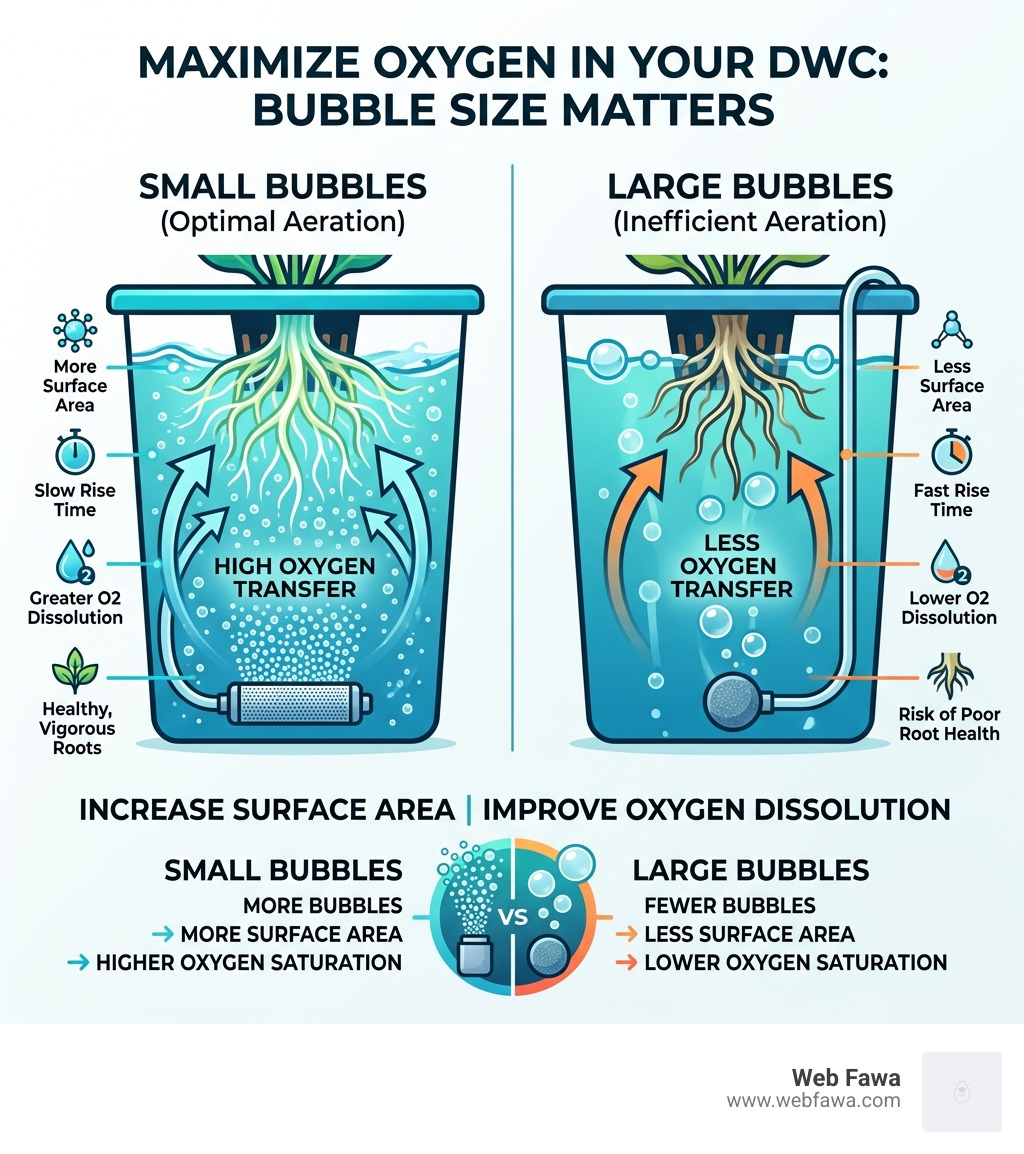
Aeration is the “heartbeat” of your system. Without it, the water becomes stagnant, oxygen levels drop, and your plants will literally drown.
We recommend an air pump that delivers at least double the liters per hour (L/h) of your reservoir volume. For a 5-gallon bucket (approx. 19 liters), you want a pump pushing at least 40 L/h, though more is almost always better. A 200 L/h pump is a standard, reliable choice for a single bucket.
Place your air stone directly under the net pot. The rising bubbles don’t just add oxygen; they also create a “splash” that keeps the growing media moist until the roots are long enough to reach the deep water.
Maintenance, Nutrients, and Troubleshooting
Now that you’re up and running, your main job is “manager of the bucket.”
1. Monitor pH and EC: Plants are picky eaters. If the pH is too high or too low, the nutrients become “locked out,” and the plant starves even if the water is full of food. Aim for a pH of 5.5–6.5. EC (Electrical Conductivity) or PPM (Parts Per Million) tells you how “salty” or nutrient-dense your water is. Start low for babies and increase as they grow.
2. Water Temperature: Keep your water between 65°F and 70°F. If you’re growing in a warm room, you might need to add “ice bottles” (frozen water bottles) to the reservoir or move the air pump to a cooler spot.
3. Water Changes: Every 1–2 weeks, you should do a full reservoir change. This prevents “nutrient imbalance” where the plant eats all of one mineral but leaves the others, leading to toxic levels of leftover salts.
For more technical details on water chemistry, check out this scientific research on optimal pH for nutrient uptake.
Troubleshooting Common Issues
- Slimy, Brown Roots: This is Root Rot (Pythium). It’s caused by low oxygen or high temperatures. Increase aeration and use a “beneficial bacteria” supplement.
- Yellowing Leaves: Usually a pH issue or a nutrient deficiency. Check your pH first!
- Algae on Clay Pebbles: Your lid is leaking light. Cover the top of the net pot with a piece of cardboard or dark plastic.
Scaling Your DWC Hydroponics DIY Setup
Once you see how fast that first head of lettuce grows, you’ll want more. You can scale by:
- The “Daisy Chain”: Connecting multiple buckets with PVC pipe to a single reservoir.
- Tote Systems: Using a 10-gallon or 27-gallon storage tote to grow 4–6 plants in one container.
- Vertical Towers: Some DWC systems can be adapted into towers to save floor space, though these usually require more powerful pumps.
Frequently Asked Questions about DWC Hydroponics
What is the ideal water level for DWC?
For young plants, the water should touch the bottom 1/2 inch of the net pot. Once roots are 4–6 inches long, leave a 1–2 inch gap of air between the bottom of the pot and the water surface. This “air gap” allows the plant to develop “air roots” for maximum oxygen uptake.
How often should I change my nutrient solution?
We recommend a full change every 7–14 days. In between, you can “top off” the bucket with pH-balanced water (no nutrients) as the plants drink.
Can I use tap water for my DIY system?
Yes, most tap water is fine for home systems. However, if your water is very hard or contains high levels of chlorine, let it sit out for 24 hours before using it, or use a simple carbon filter. Commercial hydroponic fertilizers are actually formulated to work well with standard tap water.
Conclusion
Building a dwc hydroponics diy system is more than just a fun weekend project; it’s a step toward food independence and a healthier lifestyle. In April 2026, we are seeing more people than ever turn to agritech innovation to bring the farm into the living room.
At Web Fawa, we believe that soilless cultivation is the future of sustainable gardening. It’s clean, it’s efficient, and it’s incredibly rewarding to watch a plant thrive in a “paradise” you built with your own two hands.
Whether you’re starting with a single 5-gallon bucket or planning a massive RDWC system, the most important step is to just get started. Grab a bucket, get some bubbles going, and join the revolution.
